 +91 9810683942
 info@akshatagro.com
+91 9810683942
info@akshatagro.com
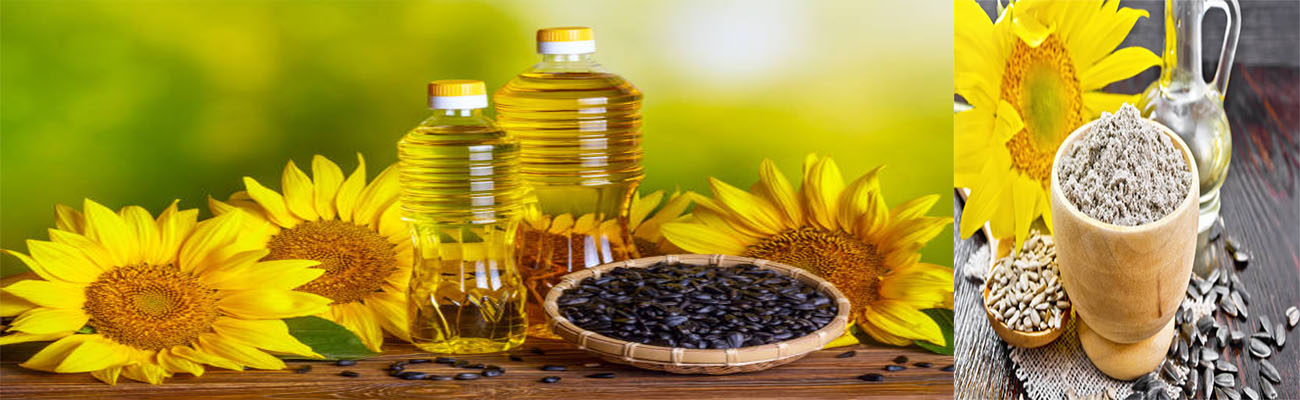
Sunflower seed A sunflower seed is a seed from a sunflower (Helianthus annuus). There are three types of commonly used sunflower seeds: linoleic (most common), high oleic, and sunflower oil seeds. Each variety has its own unique levels of monounsaturated, saturated, and polyunsaturated fats. The information in this article refers mainly to the linoleic variety. For commercial purposes, sunflower seeds are usually classified by the pattern on their husks. If the husk is solid black, the seeds are called black oil sunflower seeds. The crops may be referred to as oilseed sunflower crops. These seeds are usually pressed to extract their oil. Striped sunflower seeds are primarily eaten as a snack food; as a result, they may be called confectionery sunflower seeds. The term "sunflower seed" is actually a misnomer when applied to the seed in its pericarp (hull). Botanically speaking, it is a cypsela.When dehulled, the edible remainder is called the sunflower kernel or heart. Production Sunflower seed production – 2020 Country Production (millions of tonnes) Russia 13.3 Ukraine 13.1 Argentina 3.2 China 2.4 Romania 2.2 Turkey 2.1 Bulgaria 1.7 Hungary 1.7 World total 50.2 Source: FAOSTAT of the United Nations[2] In 2020, global production of sunflower seeds added up to 50 million tonnes, led by Russia and Ukraine with 53% of the world total combined (table). Argentina, China, and Romania also contributed significant volumes. Usage Sunflower seed kernels, dried Nutritional value per 100 g (3.5 oz) Energy 2,445 kJ (584 kcal) Carbohydrates 20 g Sugars 2.62 g Dietary fiber 8.6 g Fat 51.46 g Saturated 4.455 g Monounsaturated 18.528 g Polyunsaturated 23.137 g Protein 20.78 g Vitamins Quantity %DV† Thiamine (B1) 129% 1.48 mg Riboflavin (B2) 30% 0.355 mg Niacin (B3) 56% 8.335 mg Pantothenic acid (B5) 23% 1.13 mg Vitamin B6 103% 1.345 mg Folate (B9) 57% 227 μg Choline 11% 55.1 mg Vitamin C 2% 1.4 mg Vitamin E 234% 35.17 mg Minerals Quantity %DV† Calcium 8% 78 mg Iron 40% 5.25 mg Magnesium 92% 325 mg Manganese 93% 1.95 mg Phosphorus 94% 660 mg Potassium 22% 645 mg Sodium 1% 9 mg Zinc 53% 5 mg Other constituents Quantity Water 4.7 g ________________________________________ Link to USDA database entry • Units • μg = micrograms • mg = milligrams • IU = International units †Percentages are roughly approximated using US recommendations for adults. Sunflower are commonly eaten as a snack, but can also be consumed as part of a meal. They can be used as garnishes or ingredients in various recipes. The seeds may be sold as in-shell seeds or dehulled kernels or be sprouted and eaten in salads. When in-shell seeds are processed, they are first dried. Afterwards, they may be roasted or dusted with salt or flour for the preservation of flavor. Sunflower seeds sold by the bag are either eaten plain, salted (sometimes called 'plain') or with flavoring added by the manufacturer. Flavor examples include barbecue, pickle, hot sauce, bacon, ranch, and nacho cheese. In-shell, sunflower seeds are particularly popular in Mediterranean, Eastern European, and Asian countries where they can be bought freshly roasted and are commonly consumed as street food, the hull being cracked open with the teeth and spat out, while in many countries, they can be bought freshly packed in various roasted flavors. In the United States, they are commonly eaten by baseball players as an alternative to chewing tobacco. Mechanically dehulled kernels are sold raw or roasted and are sometimes added to bread and other baked goods for their flavor. Sunflower seed brittle is produced by embedding the kernels in hard sugar candy. In Belarus, Russia, Ukraine and Romania, roasted ground seeds are used to make a type of halva. Sunflower butter is similar to peanut butter, but made from sunflower seeds instead of peanuts, and may be a substitute for children with nut allergies. However, sunflower seeds may also cause allergies in rare cases. Sunflower seeds are commonly used as food for pets, typically being included in birdseed mix for bird feeders. Nutrition In a 100-gram serving, dried whole sunflower seeds provide 584 kilocalories and are composed of 5% water, 20% carbohydrates, 51% total fat and 21% protein (table). The seeds are a rich source (20% or higher of the Daily Value, DV) of protein (42% DV), dietary fiber (36% DV), many B vitamins (23–129% DV) and vitamin E (234% DV). The seeds also contain high levels of dietary minerals, including magnesium, manganese, phosphorus, iron and zinc (40–94% DV). Half of the weight of sunflower seeds is fat, mainly monounsaturated and polyunsaturated fats, principally linoleic acid. Additionally, the seeds contain phytosterols which may contribute toward lower levels of blood cholesterol. Sunflower oil is popular worldwide. The oil may be used as is, or may be processed into polyunsaturated margarines. The oil is typically extracted by applying high pressure to the sunflower seeds and collecting the oil. The protein-rich cake remaining after the seeds have been processed for oil is used as livestock feed. The original sunflower oil (linoleic sunflower oil) is high in polyunsaturated fatty acids (about 68% linoleic acid) and low in saturated fats, such as palmitic acid and stearic acid. However, various hybrids have been developed to alter the fatty acid profile of the crop for various purposes Hulls The hulls, or shells, mostly composed of cellulose, decompose slowly and may be burned as biomass fuel.[8] Sunflower hulls of the cultivated sunflower (Helianthus annuus) contain allelopathic compounds which are toxic to grasses and the vast majority of cultivated garden plants. Only a small number of garden plants, such as day lilies, are unaffected by the allelopathic compounds found in sunflower hulls. Types Of Sunflower Seeds: • Sunflower Seeds that we eat • Sunflower Seeds used to extract oil. Around 2000 seeds are obtained from large sunflower heads. These seeds can be eaten as a snack or they can be added to : • Mukhwas • Nutrition bars • Bread • Muffins • Yoghurt • Stir-fries • Salads You can even have sunflower butter made using these seeds. Health Benefits of Sunflower Seeds 1. Immunity Booster • Immunity boosting effects of sunflower seeds are due to the presence of vitamin E, zinc and selenium in them. • Vitamin E enhances immune responses and protects against several infectious diseases. It is also a powerful antioxidant and prevents free radicals from damaging healthy cells in our body. • Zinc protects our body from inflammation, allergies and invading pathogens, thus preventing infections and increasing overall immunity. • Selenium reduces inflammation and enhances immunity. It also helps to reduce oxidative stress from free radicals. 2. Reduces Cholesterol • The fibre content of sunflower seeds benefits by decreasing the levels of LDL cholesterol in the blood. • Niacin or vitamin B3 present in sunflower seeds reduces total cholesterol levels and risk of heart diseases. • Vitamin B5 or pantothenic acid in sunflower seeds increases HDL cholesterol and reduces total serum cholesterol levels. : High Cholesterol Diet – Foods To Eat & Avoid 3. Cardioprotective Effects • Sunflower seeds are rich in oleic and linoleic acid and low in saturated fats and sodium. They also contain magnesium, potassium and fibre. • They help to lower blood pressure and serum cholesterol levels. Consuming them also reduces the occurrence of arrhythmias. All these effects help to protect our body from occurrence of cardiovascular disorders. 4. Reduces risk of Cancer • Beta-sitosterol, a phytosterol present in sunflower seeds helps to prevent breast cancer. [9] It inhibits the growth of tumour cells, decreases the size of the tumour and also prevents metastasis. • Presence of strong antioxidants in sunflower seeds also reduces the risk of cancer. • Consumption of these seeds also reduces the chances of colon cancer. 5. Management of Diabetes Sunflower seeds are useful in reducing blood sugar levels in patients with type 2 diabetes mellitus. What is type 2 diabetes? It is a chronic condition that leads to high levels of blood sugar in your body as the cells do not respond to insulin as well as they should. A few of the symptoms include increased thirst and hunger, frequent urination, unexplained weight loss, fatigue and blurred vision. 6. Boosts function of Brain • Sunflower seeds contain vitamin B6. It improves mood and concentration and enhances memory. It releases serotonin and norepinephrine in our body. • Sunflower seeds also help to ease symptoms associated with premenstrual syndrome (PMS). • 7. Helps in Weight Loss Sunflower seeds are rich in proteins and fibre. They make us feel full for a long time, reduce our food intake and finally reduce the number of calories consumed. This helps in reduction of weight. 8. A Powerhouse of Energy • Sunflower seeds are a good source of thiamine ( vitamin B1 ). Thiamine helps to breakdown carbohydrates, proteins and fats present in our food into energy. They also help in muscle building. • A handful of sunflower seeds can give you instant energy when consumed. 9. Helps in Treatment of Anaemia • Sunflower seeds are a good source of iron. Consuming these seeds helps to up our iron levels; thus helping people suffering from anaemia. 10. Helps to Detox our Body • Sunflower seeds have potent antibacterial activity. They help in effectively removing bacteria and germs from cells. • They also help to flush out toxins from our body.